Wireless solutions bring savings and make life easier
Wireless lighting control solutions have many advantages. The most obvious are cost efficiency and grouping of luminaires independent of cabling. Read how lighting designers and contractors as well as property owners and users benefit from wireless technology.
Wireless solutions bring savings and make life easier
Wireless lighting control solutions have many advantages. The most obvious are cost efficiency and grouping of luminaires independent of cabling. Read how lighting designers and contractors as well as property owners and users benefit from wireless technology.

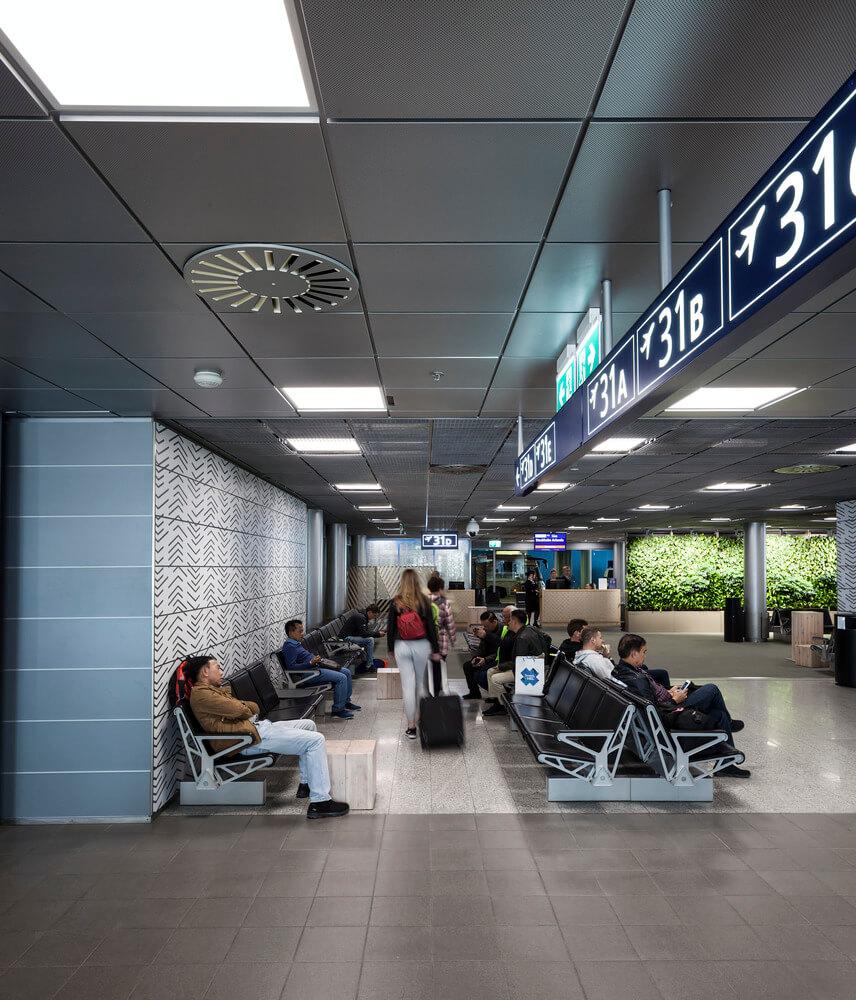
Wireless lighting control solutions can save on installation costs and energy consumption when old non-controlled lighting is converted to modern controllable lighting. Wireless control is especially well suited to renovation projects where it is not possible to add control cabling. More than 40 product families from Airam’s extensive luminaire range are available as wireless solutions.
Benefits for the lighting designer
Wireless controllability is good news for the designer, because unlike wired DALI control design work, complex control cabling for luminaires can be forgotten. In practice, lighting configuration is done wirelessly with a mobile application only after installation.
Grouping luminaires is easy and grouping can also be changed easily. Grouping is especially important to ensure wireless signal coverage. Commonly available control solutions also enable the most suitable product choice regardless of manufacturer.

Contractor’s work becomes easier
From the contractor’s perspective, installing wireless lighting is faster, easier and more affordable because the solution requires less work. Savings materialise in material costs compared with traditional DALI control because control cabling is not needed. With brief guidance, contractors can do the programming themselves without relying on external help.
Energy consumption interests the property owner
From the property owner’s perspective, the most important factors when choosing intelligent lighting control are ease of use, effortless operation and above all low energy consumption. An advantage of wireless technology is the adaptability of lighting. With wired control, changing lighting afterwards is considerably more difficult and expensive.
Optimising luminaire use generally increases their technical lifetime, which represents clear savings for the property owner over the longer term. The property maintenance manager or other person responsible for lighting can also deviate from preset rules when necessary.

Ease and effortlessness of use
For the user, wireless control brings progressiveness, comfort and practicality. Wireless technology gives users a completely new opportunity to control their own workstation lighting, for example. They are also given user training before commissioning.