
Wireless lighting control adapts
Wireless lighting control adapts when lighting situations and needs change. Lighting scenes can be controlled manually or programmed automatically without touching luminaire installations.
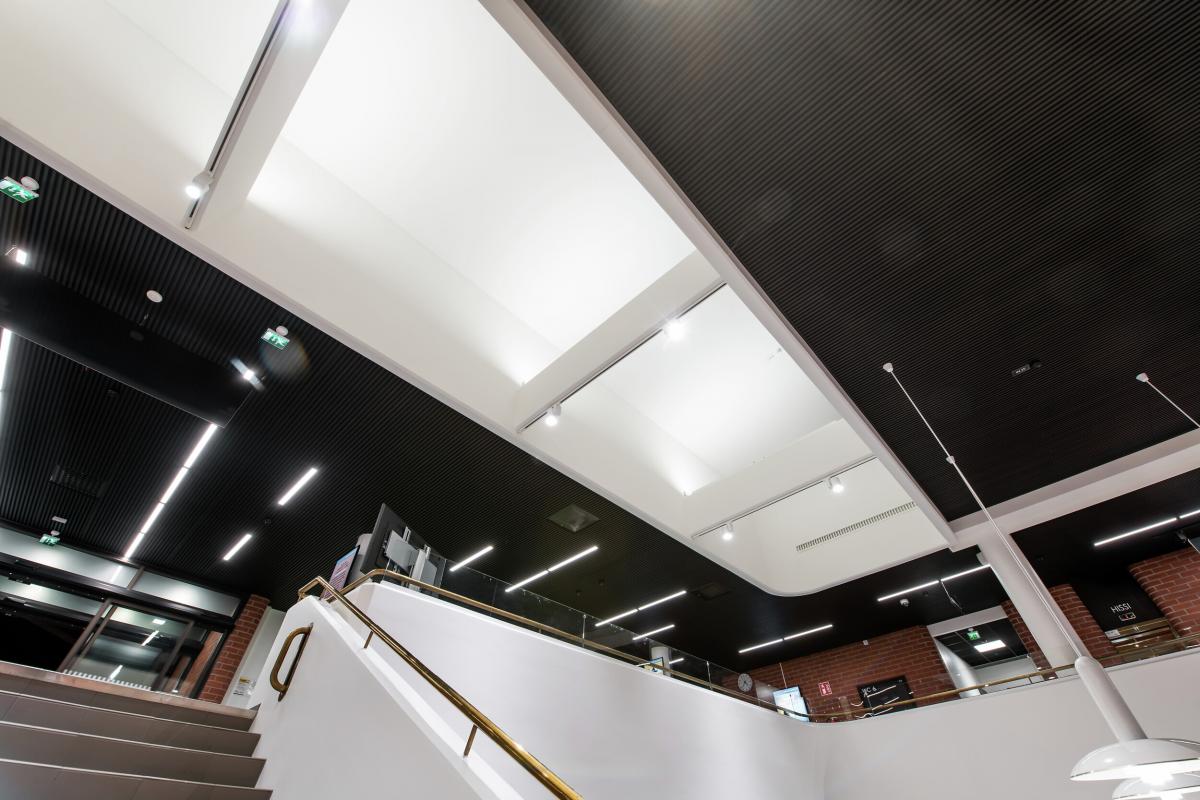
Wireless lighting control adapts when lighting situations and needs change. Lighting scenes can be controlled manually or programmed automatically without touching luminaire installations.
Wireless lighting control is an adaptable solution
Lighting scenes can easily be controlled manually or programmed automatically without touching luminaire installations. If you have chosen Airam’s wireless luminaires, it is easy to change lighting scenes and regroup them even after the luminaires have been installed.
Since the 2010s, office design has shifted strongly towards multi-space concepts that take into account the requirements of different user groups and tasks in spatial solutions. Companies are converting old cellular and open-plan offices into modern multi-purpose spaces and building new office projects inspired by the latest spatial design trends. Frequent layout changes have become the new normal and have set new requirements for office lighting.
Adaptability is the decisive difference between wired and wireless control
Continuous adaptability in lighting means a decline in traditional wired lighting solutions. Wireless lighting control enables layout changes quickly without extra cabling or moving luminaires. This is beneficial if the purpose of the spaces changes or when the tenant changes. Flexibly controlled lighting is a major advantage in multi-purpose spaces when furniture or walls are added, removed or rearranged. Changing wireless lighting is even easier: lighting groups can be dismantled and modified wirelessly with a phone application.
Intelligent lighting
Lighting adapts because intelligent luminaires can adjust to changes in the environment and the resulting changes in lighting requirements. Preset control settings can easily be overridden when necessary. Luminaires can be added or removed flexibly afterwards without compromising control. Changes are updated simply to the system with a mobile application. The self-learning ActiveAhead system can even optimise lighting independently.
The unbeatable advantages of wireless lighting are therefore the easy modification of space lighting as needed: limiting or increasing the number of luminaires, or even dimming and changing colour temperature. Wireless control works excellently in projects where only the lighting control system needs to be updated without a massive renewal of the electrical system. This is especially beneficial in renovation projects where it is not possible to add control cabling afterwards.
A wireless solution is a sustainable investment
Wireless technology changes perceptions of lighting control systems. In addition to eliminating complex control cabling, it is also a sustainable solution for the long term. Control systems are continuously developed and updated, and new system features can be adopted afterwards as well. This improves performance and ease of use.
Towards human-centric lighting
With Casambi control, you can manage lighting scenes automatically according to the changing daily rhythm. In human-centric lighting, lighting can be set to match the human natural rhythm. In the morning – when more alertness is needed – lighting is cooler and more intense. In the evening it is natural to prefer warmer and dimmer light as the body prepares for rest.
Automating lighting
Lighting can also be scheduled by day of the week, time of day and calendar. Energy and luminaires can be saved at weekends and during summer time when daylight is available. The system is intelligent because it takes into account sunrise and sunset times in different months based on the system’s location.
Daylight sensors can also be connected to lighting to automate light requirements. Constant light controlled lighting dims or switches off completely if there is sufficient daylight.