
Benefits of wireless lighting control in different office use situations
Wireless control of the lighting system gives the designer freedom to create the right and pleasant lighting in a user-oriented, cost-effective and adaptable way.
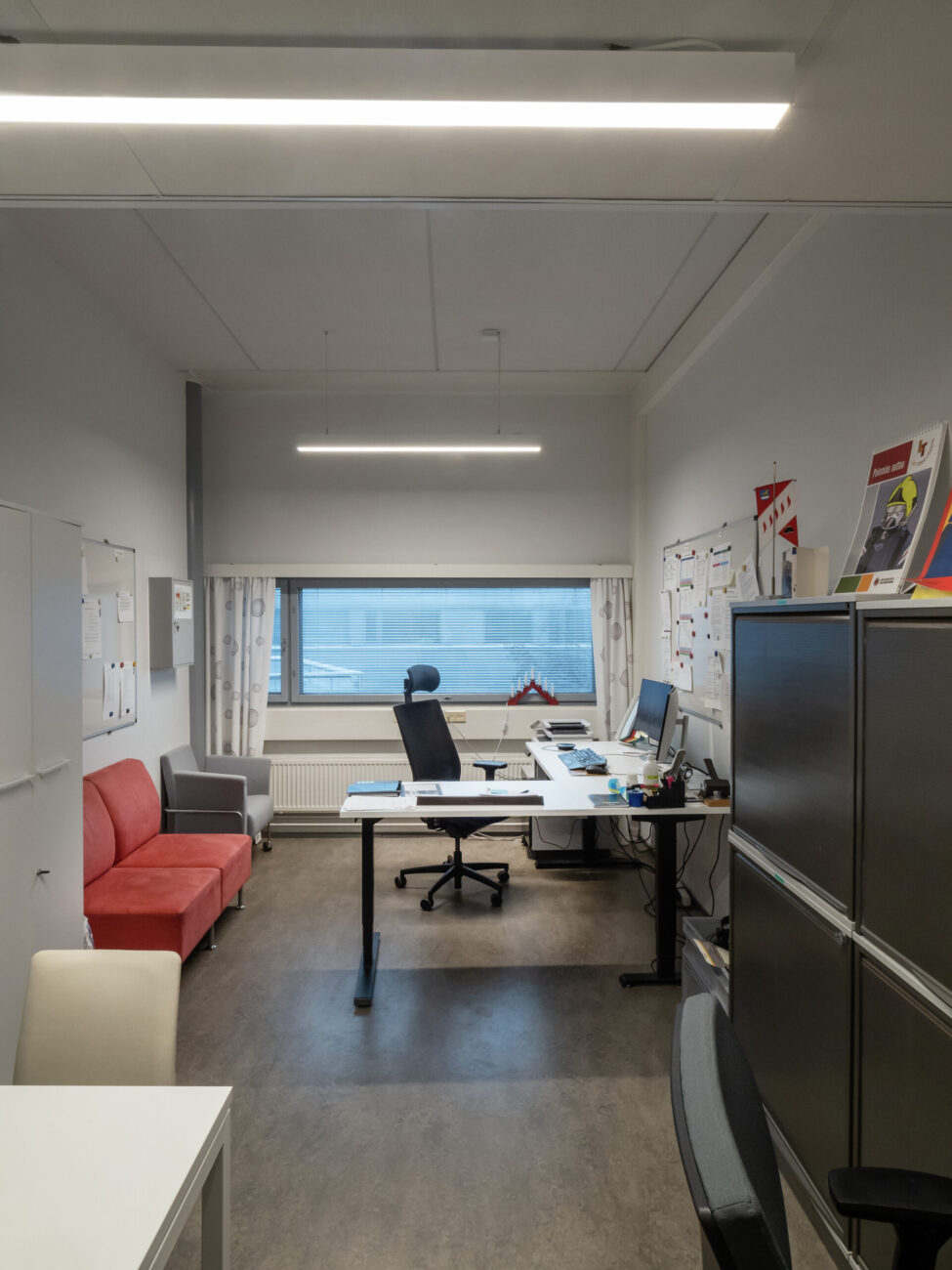
Wireless control of the lighting system gives the designer freedom to create the right and pleasant lighting in a user-oriented, cost-effective and adaptable way.
Flexibility and cost savings at all stages of the project
Wireless lighting control means flexibility for all parties in the project. By choosing wireless technology, the lighting or electrical designer offers the client user-oriented, modern and easily adaptable lighting solutions
Airam’s Sales Director Ville Keinänen has demonstrated the benefits of wireless technology in several projects: “In an open-plan office or meeting room, layout changes can be made much more freely because partition walls do not need to be cabled, junction boxes installed or new connections made. These represent significant cost savings, which is important for both the designer and the end user of the space.”
- helps save money on the amount of materials to be purchased
- helps save time with faster installation
- increases adaptability for layout changes
- improves the energy efficiency of the office property during use.
Lighting control according to user needs
Understanding user needs is important in lighting design. The purpose of the same space can change several times a day and different situations require different lighting. Different work zones on the same floor require different lighting solutions depending on the activity taking place, the number of people continuously present in the area and the amount of natural light in different seasons.
In a meeting room, daylight and the presentation technology used primarily affect lighting needs. AV presentations require dimmed lighting. Situations that call for alertness need stronger and cooler light. Seating arrangements and furniture solutions also affect the lighting design. When planning lighting for an adaptable meeting room, it is worth mapping out whether traditional meetings will be held with participants around the same table, or also workshops requiring people to be divided into small groups in different parts of the room.
Recently we have become accustomed to the idea that ways and places of working are changing. Remote work and hybrid working models have become the new normal for many.
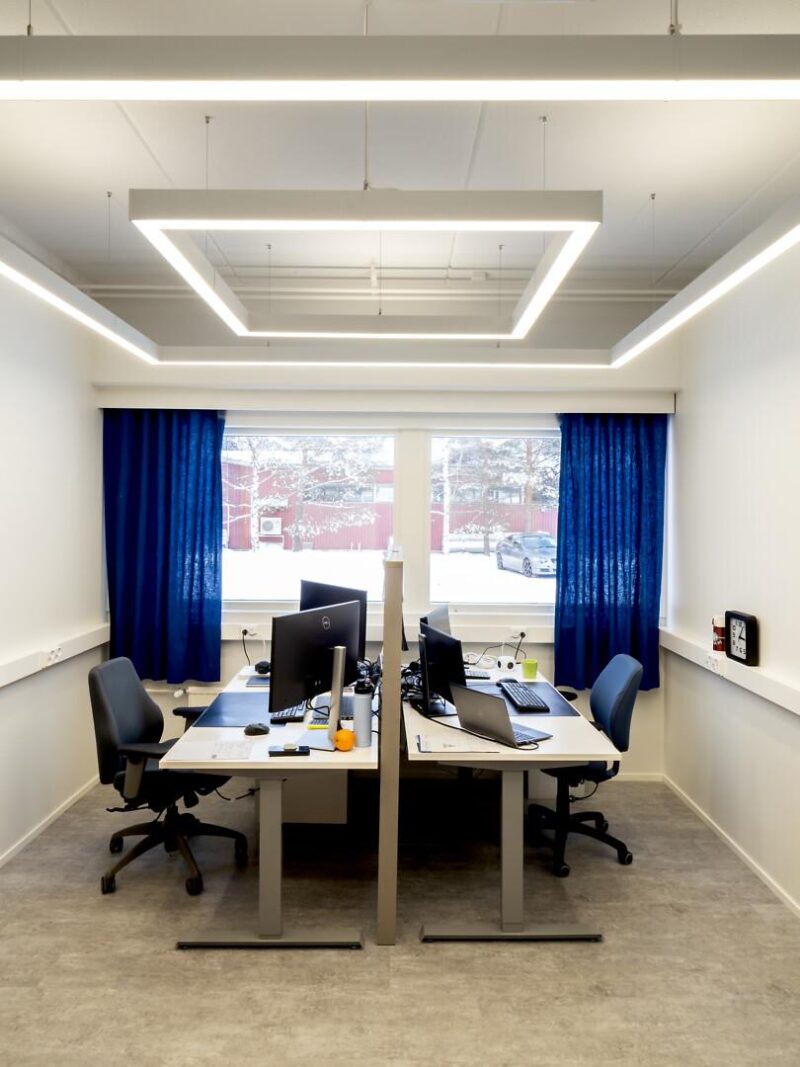
Wireless control makes control cabling unnecessary
Lighting can be controlled in many ways with both wired and wireless solutions. For example, light control with motion sensors, presence sensors, daylight sensors or scheduling has been possible long before wireless solutions entered the market. The difference is that control cabling is not needed. Wireless capabilities, “wireless intelligence”, have been added to wireless sensors. This allows sensor-based detectors to communicate with wireless lighting control without control cabling. Sensors can also be integrated in the luminaire.
“If the sensor is built into the luminaire, we are talking about an integrated sensor. However, sensors are relatively expensive. In an office room with six luminaires, each can have its own sensor or there can be just one in the ceiling that is sufficient to detect the entire area. This is a cost issue,” Keinänen advises.
Wireless control makes it possible to override automatic settings
Lighting control is usually programmed to operate automatically across larger areas according to predefined criteria and variables. Wireless control provides more freedom to override automatic settings when necessary. For example, if a certain light level has been programmed to remain constantly on at every workstation throughout the office, daylight and presence sensors can be used to adjust lighting and compensate for external light or light levels at workstations.
However, the same settings do not always suit everyone in different work tasks. Tasks can affect how much light is needed. Light requirements also differ for older people. Wireless control enables easy workstation-specific adjustment without opening suspended ceilings and cabling. Wireless switches can be placed in the space for cleaning purposes, for example. When the cleaner arrives, they can override automatic control with a button press and switch cleaning lights to full brightness even if the space is in an automatic lighting mode at that time.